
TL;DR:
- All-inclusive tour packages bundle lodging, meals, beverages, activities, and often transportation into one upfront price, but their inclusions vary widely across providers. They offer benefits like cost predictability and wellness options, making them ideal for relaxation and stress-free travel, especially for groups and first-time travelers. Careful evaluation of what is actually included and matching the package to your travel style ensures you maximize value and avoid surprise expenses.
All-inclusive tour packages are single-price travel deals that bundle lodging, meals, beverages, activities, and often transportation into one upfront cost, removing the need to budget for each component separately. The term “all-inclusive” is not standardized across the travel industry, which means what you get varies dramatically depending on the provider and destination. Hyatt Inclusive Collection, Mapache Tours, and Skift research all confirm that the definition ranges widely from basic buffet-and-bed resorts to genuinely comprehensive packages covering flights, transfers, gratuities, and travel insurance. Understanding exactly what is and is not covered before you book is the single most important step any traveler can take.
What are all-inclusive tour packages and what do they include?
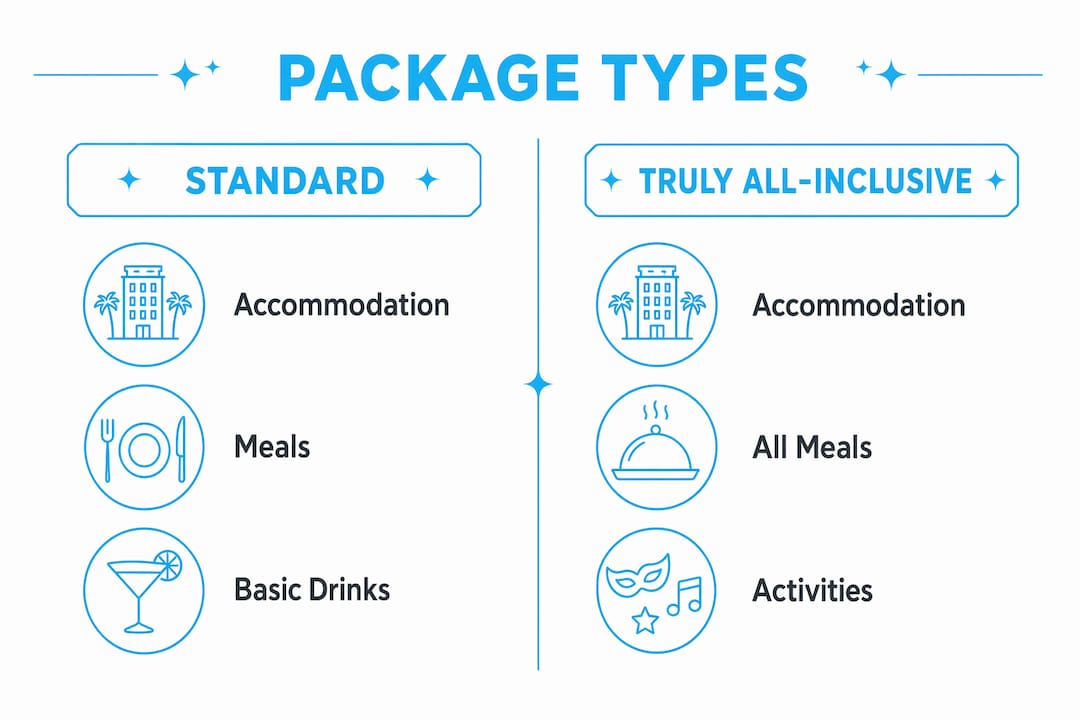
All-inclusive tour packages typically cover four core components: accommodation, meals, non-premium beverages, and a selection of on-site activities or guided excursions. Beyond that foundation, inclusions vary sharply. Some packages add airport transfers, gratuities, entertainment, and wellness programming. Others treat those same items as paid add-ons.
The most common inclusions across standard packages are:
- Accommodation (hotel room, resort villa, or cabin depending on the tour)
- Meals (usually buffet-style with limited à la carte options)
- House beverages (non-premium alcohol, soft drinks, coffee, and water)
- Basic activities (pool access, fitness center, non-motorized water sports)
- On-site entertainment (evening shows, live music, cultural performances)
What gets left out is where travelers get surprised. Hidden fees such as airport transfers, gratuities, specialty dining, premium alcohol, spa treatments, and optional excursions are common exclusions that can add hundreds of dollars to a trip you thought was fully paid. WiFi charges and resort fees also appear frequently in the fine print.
At the other end of the spectrum, some operators offer what the industry calls “truly all-inclusive” or “fully escorted” packages. These cover flights, travel insurance, all meals and drinks including premium brands, every activity, all transfers, and tips. Approach Tours describes this model as the gold standard, but it commands a significantly higher price point.

| Component | Standard all-inclusive | Truly all-inclusive |
|---|---|---|
| Accommodation | Included | Included |
| Meals | Buffet and limited à la carte | All dining venues included |
| Beverages | House brands only | Premium brands included |
| Airport transfers | Often excluded | Included |
| Gratuities | Usually excluded | Included |
| Flights | Not included | Included |
| Travel insurance | Not included | Included |
| Specialty excursions | Paid add-on | Included |
Pro Tip: Before booking, request a written inclusions list from the provider and ask specifically about airport transfers, gratuities, and specialty dining. Verbal assurances are not enough.
Benefits and drawbacks of choosing all-inclusive tour packages
The core appeal of all-inclusive travel is financial predictability. 77% of travel advisors report that cost predictability is the primary reason clients choose these packages. That statistic reflects a genuine psychological benefit: knowing your total spend before you leave home removes a significant source of travel anxiety.
Wellness is now a major driver as well. 84% of travelers say access to well-being experiences like yoga and meditation influences their all-inclusive booking decisions. This shift reflects a broader trend where travelers are choosing packages not just for convenience but for recovery and mental restoration. Personalization is also improving: nearly 80% of travelers report satisfaction with how resorts understand their preferences and recommend activities.
“The real benefit of all-inclusive packages lies in the mental ease and elimination of daily planning stress, not just unlimited food or drinks.” — The Manual
All-inclusive packages work best for specific traveler profiles:
- First-time international travelers who want logistics handled
- Groups and families coordinating multiple people’s needs
- Couples seeking relaxation without constant decision-making
- Travelers recovering from burnout who want a full break from planning
- Celebrators (birthdays, anniversaries, bachelor parties) who want a contained, festive experience
They work less well for travelers who want deep cultural immersion, those who prefer eating at local restaurants, and fast-paced explorers who spend most of their time off-property. Packages deliver best value for travelers who fully engage with included amenities. If you plan to leave the resort every day to explore independently, you risk paying for services you never use.
Pro Tip: Calculate how many meals, drinks, and activities you realistically plan to use before booking. If your honest answer is “not many,” a standard hotel may cost less overall.
How do all-inclusive packages compare to other travel types?
All-inclusive packages are one of four main travel formats, each suited to a different traveler. Understanding the differences helps you evaluate whether the bundled model actually saves you money or just feels like it does.
| Package type | Best for | Flexibility | Planning effort | Avg. daily cost |
|---|---|---|---|---|
| All-inclusive resort | Relaxation, groups, celebrations | Low | Minimal | $150 to $400 per person |
| Guided group tour | Cultural immersion, solo travelers | Medium | Low | $100 to $250 per person |
| Private/custom tour | Personalized itineraries | High | Medium | $200 to $500 per person |
| Self-guided travel | Independent explorers | Very high | High | Varies widely |
Average costs for all-inclusive resorts fall between $150 and $400 per person per day depending on destination and service level. That range sounds wide, but it narrows considerably once you factor in what is actually covered. Guided group tours charge less per day but add costs for meals, entrance fees, and tips that all-inclusive packages absorb.
The most important comparison metric is total loaded cost, not headline price. Industry analysts recommend evaluating total loaded cost by adding every non-included fee to the sticker price before comparing options. A $200-per-day all-inclusive that covers transfers, tips, and all meals may cost less than a $120-per-day guided tour once you add those same items back in.
Tour operators also leverage purchasing volume to pass savings to travelers. Best-value packages save 15 to 25% compared to booking each component independently, with better logistics coordination included. That savings margin is real, but only materializes when you use what is included.
Pro Tip: Build a simple spreadsheet listing every component you expect to use on a trip, price each one individually, then compare that total to the all-inclusive price. The math often surprises people in both directions.
How to choose the best all-inclusive tour package for your needs
Choosing the right package requires more than comparing prices. The best all-inclusive travel deals match your actual travel behavior, not just your aspirations for the trip.
Follow these steps to evaluate packages effectively:
- List every inclusion explicitly. Ask the provider to confirm in writing what meals, beverages, activities, transfers, and gratuities are covered. Do not assume anything.
- Match the package to your travel style. If you want to explore local neighborhoods and eat at street food stalls, a resort-based all-inclusive is a poor fit. If you want to relax and have everything organized, it is ideal.
- Check reviews for hidden cost complaints. Search the provider’s name alongside terms like “hidden fees” or “not included.” Patterns in reviews reveal what the marketing materials omit.
- Calculate your realistic usage. Estimate how many meals, drinks, and activities you will actually use. Packages reward heavy users and penalize light ones.
- Compare total loaded costs. Add every likely out-of-pocket expense to the base price before comparing packages side by side.
- Assess group size and dynamics. All-inclusive packages simplify coordination for groups significantly. The larger your group, the more valuable the bundled format becomes.
- Verify provider reputation. Look for operators with transparent pricing, clear cancellation policies, and verifiable customer reviews on platforms like TripAdvisor or Google.
The all-inclusive travel growth trend is being driven by demand for personalization and guest control, according to Hyatt Inclusive Collection’s vice president. That means better packages are available now than five years ago, but it also means more operators are using the label loosely to attract bookings.
For celebrations and special events specifically, look for packages that include photography, personalized amenities, and dedicated service. These details separate a memorable experience from a generic one. You can also explore what all-inclusive limo tours include as a reference point for how premium operators structure their bundled offerings.
Pro Tip: Call the provider directly before booking and ask one specific question: “What is the one thing most guests are surprised is not included?” The answer tells you more than any brochure.
Key takeaways
All-inclusive tour packages deliver genuine value when the inclusions match your travel behavior, but the term “all-inclusive” requires scrutiny because no industry standard defines what it must cover.
| Point | Details |
|---|---|
| Definition varies widely | Always request a written inclusions list covering meals, transfers, tips, and activities before booking. |
| Cost predictability drives demand | 77% of travelers choose all-inclusive packages specifically for financial predictability and reduced planning stress. |
| Wellness is now a core feature | 84% of travelers factor in yoga, meditation, and well-being programming when selecting all-inclusive options. |
| Total loaded cost is the real metric | Add all non-included fees to the sticker price before comparing packages to independent bookings. |
| Best value for high-usage travelers | Packages reward travelers who use included amenities fully; partial use often means paying for unused benefits. |
Why I think most travelers misread all-inclusive packages
After years of watching travelers book all-inclusive packages and return either thrilled or disappointed, the pattern is almost always the same. The thrilled ones matched the package to how they actually travel. The disappointed ones booked based on how they imagined they would travel.
The biggest mistake I see is treating “all-inclusive” as a synonym for “no decisions required.” The label removes logistical decisions, but it does not remove the need to choose the right package in the first place. That choice requires honest self-assessment. Are you someone who will use the spa, attend the evening shows, and eat every meal on-site? Or will you spend half your days exploring the city and eating locally? The package that looks like a deal for the first traveler is a waste of money for the second.
I also think the wellness shift in all-inclusive travel is genuinely significant and underreported. The fact that 84% of travelers now factor in yoga and meditation access when choosing packages signals that people are using these trips for recovery, not just recreation. That changes what “value” means. A package that costs more but includes structured wellness programming may deliver more genuine benefit than a cheaper option with unlimited drinks.
The travelers I have seen get the most from all-inclusive experiences are those who treat the package as a deliberate choice to hand over control for a defined period. That mindset shift, from “I am paying for everything” to “I am buying freedom from decisions,” is what separates a great trip from a frustrating one. For celebrations especially, that freedom is worth paying for.
— David
Experience all-inclusive luxury on the Las Vegas Strip with Myvegaslimotour
If the idea of a fully covered, zero-logistics experience appeals to you, Myvegaslimotour delivers exactly that for Las Vegas celebrations. Every package includes private limousine service, professional photography, complimentary champagne, and gratuities, so there are no surprise costs at the end of the night.
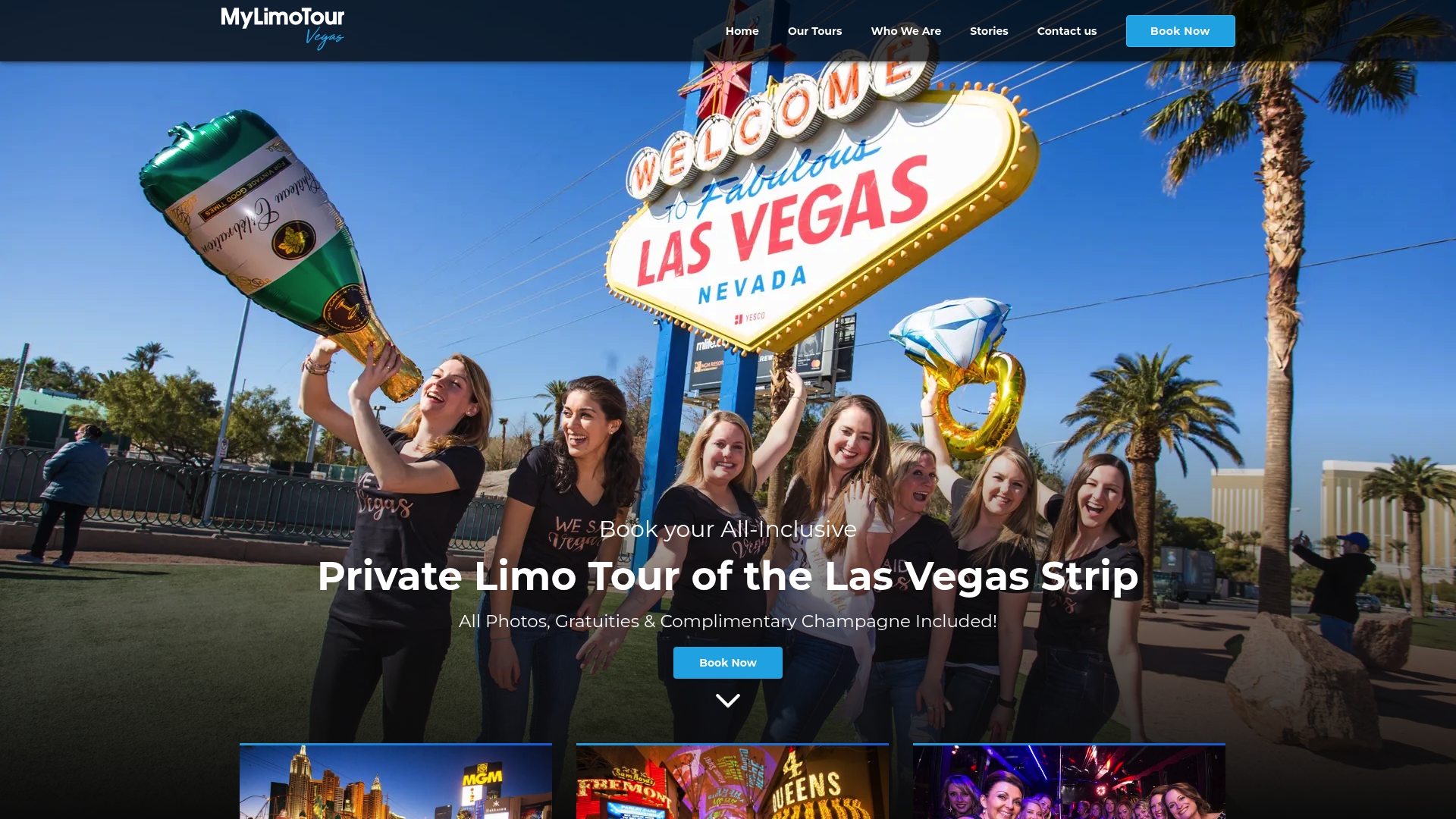
Whether you are planning a birthday, bachelorette party, anniversary, or corporate event, Myvegaslimotour’s luxury limo tour packages cover everything from Strip sightseeing to personalized celebration setups. Groups from two to large party bus bookings are accommodated, with transparent pricing and customizable options. Explore the advantages for celebrations and see why hundreds of visitors choose this format for their most memorable Las Vegas nights.
FAQ
What does all-inclusive mean in a tour package?
All-inclusive means one upfront price covers most major travel components, typically accommodation, meals, beverages, and activities. The exact inclusions vary by provider, so always request a written list before booking.
Are all-inclusive vacations actually worth the cost?
They are worth it for travelers who use the included amenities fully. Tour operators offer 15 to 25% savings over booking components separately, but that value disappears if you spend most of your time off-property.
What is usually not included in all-inclusive packages?
Common exclusions include airport transfers, gratuities, premium alcohol, specialty dining, spa treatments, and optional excursions. These surprise costs can add significant unplanned expense to a trip marketed as fully covered.
How do I compare all-inclusive packages effectively?
Calculate the total loaded cost by adding every non-included fee to the base price, then compare that figure across packages. Headline price alone is a poor comparison metric for bundled travel products.
Who benefits most from all-inclusive tour packages?
First-time international travelers, groups, couples seeking relaxation, and celebration travelers benefit most. Independent explorers and culture-focused travelers often find better value in guided or self-directed formats.